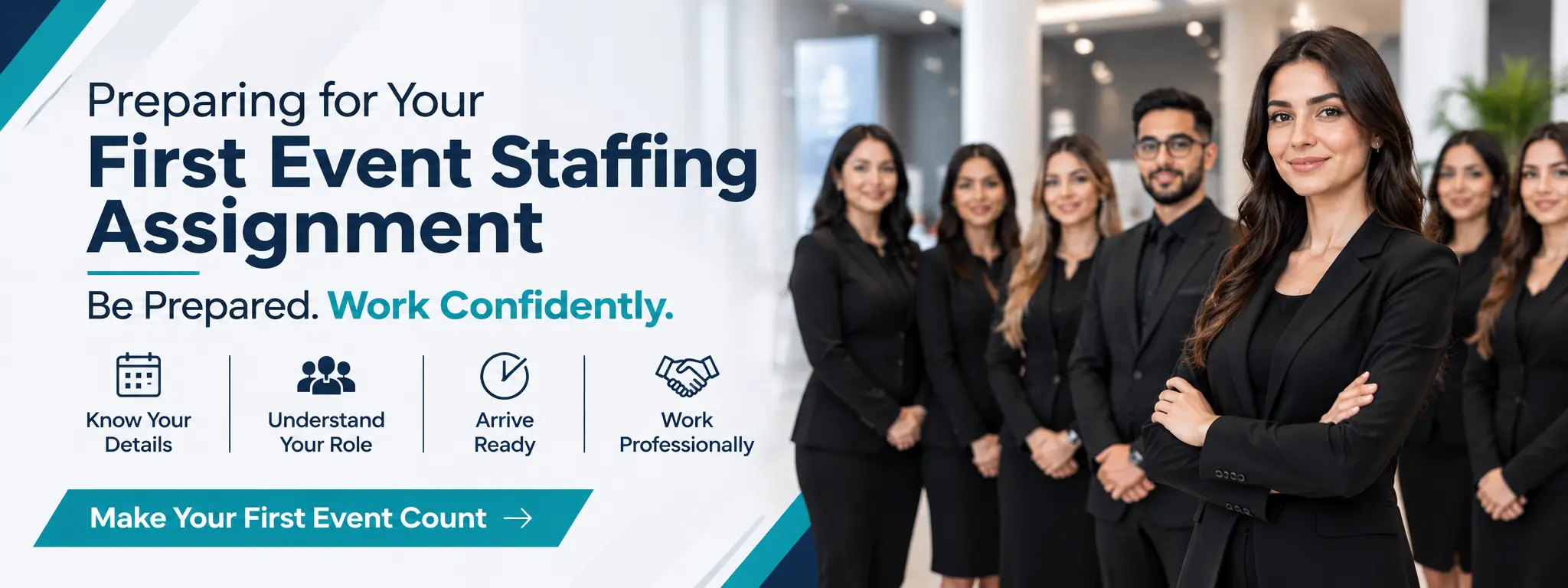
Preparing for Your First Event Staffing Assignment
Receiving your first event staffing assignment is exciting, but good preparation is important.
Temporary event work can move quickly. Guests may arrive at a fixed time, doors may open immediately after briefing, and every staff member usually has a specific position or responsibility.
Whether you have been selected as a Hostess, Promoter, Usher, Registration Staff member, Brand Ambassador or Exhibition Staff, understanding the assignment before you arrive will help you perform more confidently.
Here is how to prepare.
→ Register for Event Jobs in Dubai
Read the Complete Assignment Details
Do not confirm an event job after reading only the date and payment. Review the complete assignment information, including:
- Event date
- Venue and location
- Reporting time
- Expected working hours
- Your assigned role
- Dress code
- Language requirements
- Briefing or training details
If the assignment runs for several days, confirm that you are available for every required date before accepting. Once you confirm, the staffing team plans around your attendance.
Understand Your Role
Different event jobs involve different responsibilities. A Hostess may focus on welcoming guests, while an Usher may be responsible for directing attendees towards halls and seating areas. Registration Staff may work with guest lists and badges, while Promoters are expected to approach customers proactively. Before the event, make sure you understand what your role involves. Do not assume that because you worked at another event, the responsibilities will be identical. Every event has its own programme, venue and client requirements.
Plan Your Journey Before Event Day
Event staff usually need to report before guests arrive. Search the venue location in advance and understand how long the journey is likely to take. If you are travelling by public transport, check where the nearest station or stop is and how you will complete the final part of the journey. If you are driving, consider parking arrangements. Give yourself enough additional time for unexpected delays. Arriving exactly at guest opening time is not the same as arriving at the required reporting time.
Prepare Your Uniform & Grooming
Check the confirmed dress code the night before. Make sure your clothes are clean, prepared and suitable for the assignment. If the client has provided branded clothing, confirm that you have the correct items and sizes. Shoes should match the dress code while remaining practical for long periods of standing or movement. Complete your grooming before leaving home rather than depending on having time to prepare at the venue. A professional appearance should be maintained throughout the entire shift.
Arrive Ready for Briefing
The onsite briefing may contain information you need throughout the event. Depending on your role, this could include venue routes, guest categories, registration procedures, product information, programme timings or stand responsibilities.
Listen carefully. If something is unclear, ask during the briefing rather than waiting until guests arrive. You may also be told who your supervisor or main onsite contact is. Remember that person so you know where to escalate questions during the event.
Learn the Important Event Information
You do not need to know everything about the event. You do need to know the information relevant to your position. For example, an Usher should know where the main halls and registration areas are. A Registration Staff member should understand the different guest categories and check-in procedure. An Exhibition Staff member should understand the exhibitor’s basic stand objective. A Brand Ambassador should know the approved product information they have been briefed to communicate. Focus on the information guests are most likely to ask you about.
Communicate Professionally With Guests
Your first event may feel busy, but avoid showing uncertainty unnecessarily. Listen carefully to the guest before answering. If you know the answer, provide it clearly. If you are not sure, do not guess. Say that you will confirm the information and check with the appropriate team member. Giving a guest the wrong direction or incorrect event information simply to provide a quick answer can create more problems. Professional communication includes knowing when to ask for help.
Stay at Your Assigned Position
One of the easiest mistakes for new event staff is moving away from their assigned position without informing anyone. Your position may have been selected because it is an important guest touchpoint. If you need a break or assistance, follow the instructions provided by your supervisor. Do not change positions simply because another area appears busier unless you are asked to move. Event teams work best when everyone knows where each staff member is located.
Keep Personal Phone Use Limited
Your phone may be useful for contacting your staffing supervisor or accessing information required for the assignment. Personal use is different. Avoid scrolling through social media, taking personal calls or messaging continuously while standing in a guest-facing area. Even when no guests are directly in front of you, excessive phone use can look unprofessional to clients and supervisors. Use approved breaks for personal matters wherever possible.
Work as Part of the Team
Temporary event work often involves people who have not worked together before. Introduce yourself professionally and cooperate with the team. If another staff member asks for information you know, help where appropriate. At the same time, do not abandon your own responsibility to solve someone else’s task unless instructed. Respect supervisors, client representatives, venue staff and colleagues. Professional teamwork is often noticed just as much as individual performance.
What to Do If There Is a Problem
Problems can occur during live events. A guest may complain, the programme may change or something may happen that is outside your authority. Do not make major decisions independently unless your role specifically allows it. Follow the escalation process given during briefing. For example, an Usher should not make security decisions, and temporary Registration Staff should not change an attendee’s status unless the approved process allows it. Knowing when to escalate is part of professional event work.
Before You Leave the Event
Do not leave simply because guest activity appears to have finished. Wait until your agreed working time is complete or the authorised supervisor releases you. Return any equipment, badges, uniforms or other items according to the instructions provided. If attendance or sign-out procedures are being used, complete them before leaving. For multi-day assignments, confirm the next day’s reporting details before you go.
Your First Assignment Can Build Your Reputation
Your first event is not only one day’s work. It is also an opportunity to demonstrate your reliability. Staffing teams notice candidates who arrive on time, follow instructions, communicate professionally and complete their assignments properly. A good performance does not guarantee future work, but it can help build a stronger record when suitable opportunities arise. Temporary event staffing depends heavily on reliability, so your onsite behaviour matters.
Looking for Your First Event Opportunity?
Future Minds invites candidates interested in temporary event work to register their profiles for suitable assignments. Provide accurate information about your experience, languages, preferred roles and availability so our team can better understand where your profile may fit.